Generative AI in Oracle APEX: From a 2023 Vision to APEX 26.1

Looking back at 2023
In October 2023, I published an article in Hungarian about generative AI in application development.
At the time, many of the ideas discussed here were still expectations about where low-code and AI might take us.
Three years later, it is interesting to look back at what actually happened.
In 2023, generative AI was already changing the way we thought about software development.
My main interest was not whether AI could write code.
The more interesting question was whether it could change the relationship between business users, developers and the applications they build together.
That question still matters today.
The problem existed long before generative AI
For many years, I have worked with business teams that were not simply users of enterprise software.
They understood their processes deeply and often knew exactly what would make their daily work more efficient.
The traditional software development model, however, creates a difficult translation problem:
the business user describes a requirement, the developer interprets it, builds something, and the user later decides whether the result actually solves the original problem.
This takes time.
And while the software project is progressing, users often create their own solutions using spreadsheets, small databases or other tools.
This is one of the reasons low-code platforms became interesting to me long before the current AI wave.
Low-code had already started changing the boundary
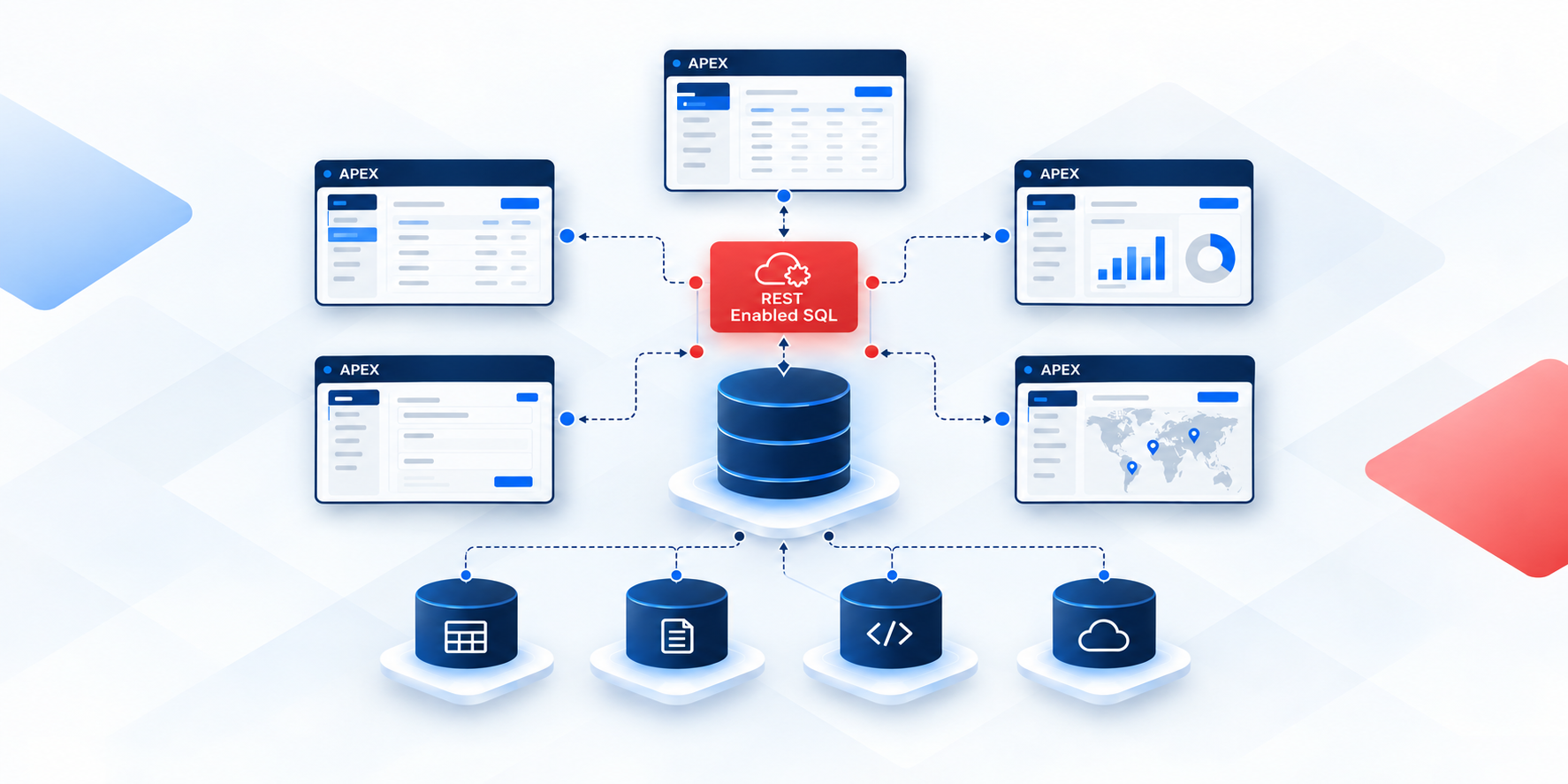
Oracle APEX allows applications to be built close to the data, using a largely declarative development model.
A developer — and in some cases an experienced business user — can create useful applications without building an entire technology stack from scratch.
In my 2023 article, I argued that generative AI could push this idea significantly further.
Instead of selecting components and manually writing every SQL statement, developers could increasingly describe what they wanted in natural language.
For example:
Show the average salary of employees by department.
The development environment could use information about the database structure to generate the SQL needed for the report or chart.
At the time, this felt like an important next step.
From natural language to SQL
One of the examples I discussed in 2023 was an AI assistant helping generate SQL based on a natural-language request.
The important part was not only the language model itself.
The model also needed context:
available tables
columns and data types
primary keys
foreign keys
relationships between database objects
Without this context, an LLM only knows SQL.
With the context, it can begin to understand your application and your data model.
This distinction is even more important today.
What happened next?
By 2026, AI support in Oracle APEX has moved considerably beyond the experiment I described in 2023.
APEX Assistant can help developers work with SQL directly inside the development environment.
Generative AI can also be used during application creation.
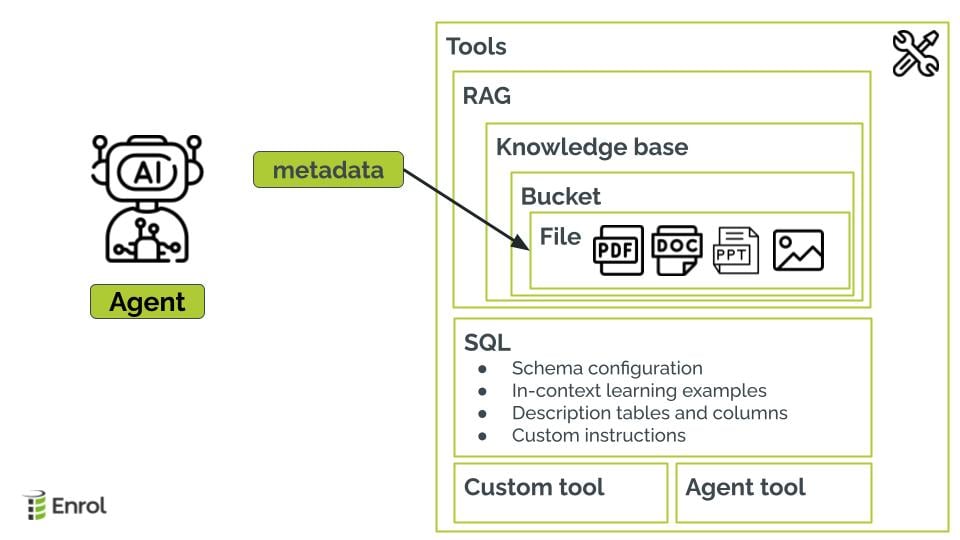
But perhaps the most interesting development for me is that AI-assisted development is moving beyond generating individual pieces of SQL or PL/SQL.
It is beginning to work with the structure of the application itself.
APEXlang changes the discussion
Oracle APEX 26.1 introduced APEXlang, an open, human-readable representation of an APEX application.
This is important for AI-assisted development.
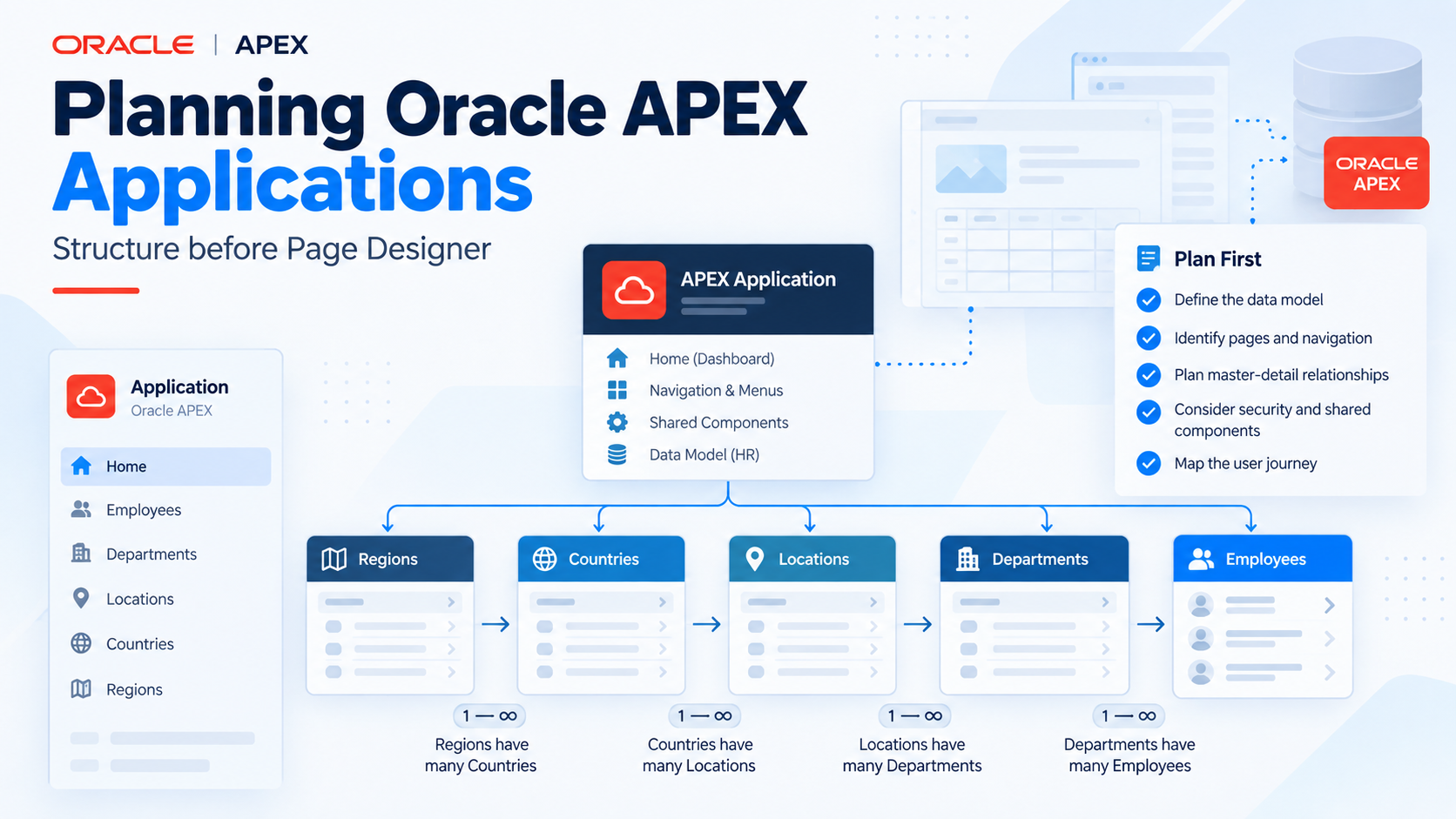
Instead of treating an APEX application only as something configured through Page Designer or represented by a large SQL export, developers and AI tools can work with a structured application definition.
This makes new workflows possible:
AI-assisted application generation
reviewing proposed application changes
version control
validation
application comparison
controlled modification of pages and components
collaboration between external AI coding agents and APEX
The AI is no longer helping only with a SQL statement.
It can increasingly help work with the application model itself.
From prompt to specification
Another important change is the move from simple prompting toward structured specifications.
For enterprise applications, saying:
Build me an application for managing customers.
is rarely enough.
Real systems have:
roles
workflows
validations
security rules
integrations
data models
business constraints
existing applications and processes
The better the specification and context we provide, the more useful AI becomes.
This is why I think AI-assisted development will increasingly become specification-driven development rather than simply prompt-driven coding.
AI does not remove the need for structure
This is probably the biggest difference between how I thought about the subject in 2023 and how I think about it today.
In the early generative AI discussion, the emphasis was often on what AI could generate.
Today, I think the more important questions are:
Can we understand what was generated?
Can we validate it?
Can we maintain it?
Can we safely modify it?
Can we integrate it with existing systems?
Can we govern the development process?
Generating software is becoming easier.
Maintaining reliable enterprise software is not.
Why low-code may become more important, not less
It might seem logical that if AI can generate code, low-code platforms become less important.
I increasingly think the opposite may happen.
AI can generate almost unlimited amounts of code.
But more code also means more complexity to understand, test and maintain.
A declarative platform provides an abstraction layer.
Instead of asking AI to generate every technical implementation detail, we can describe the application's intent within a defined application model.
This is where I believe platforms such as Oracle APEX become particularly interesting in an AI-driven development world.
The user and developer move closer together
One idea from my 2023 article has become even more relevant.
The boundary between:
developer and user
IT and business
supplier and customer
continues to become less rigid.
AI allows people to express requirements more directly.
Low-code provides a controlled environment in which those requirements can become applications.
The developer's role does not disappear.
It changes.
More attention moves toward:
architecture
data
security
integration
validation
governance
maintainability
and less toward manually producing every line of implementation code.
Looking back
When I wrote about generative AI and APEX in 2023, I mainly saw AI as a new way to help developers and users communicate with the application platform.
Three years later, that idea has expanded considerably.
We are moving from:
natural language → SQL
toward:
requirements → specification → application model → validated application
That is a much bigger change.
And I think we are still near the beginning.
My broader professional journey has followed a similar path:
Database → APEX → Cloud → AI
The technologies keep changing.
The central question remains remarkably consistent:
How can we turn business knowledge and data into reliable software more effectively?